


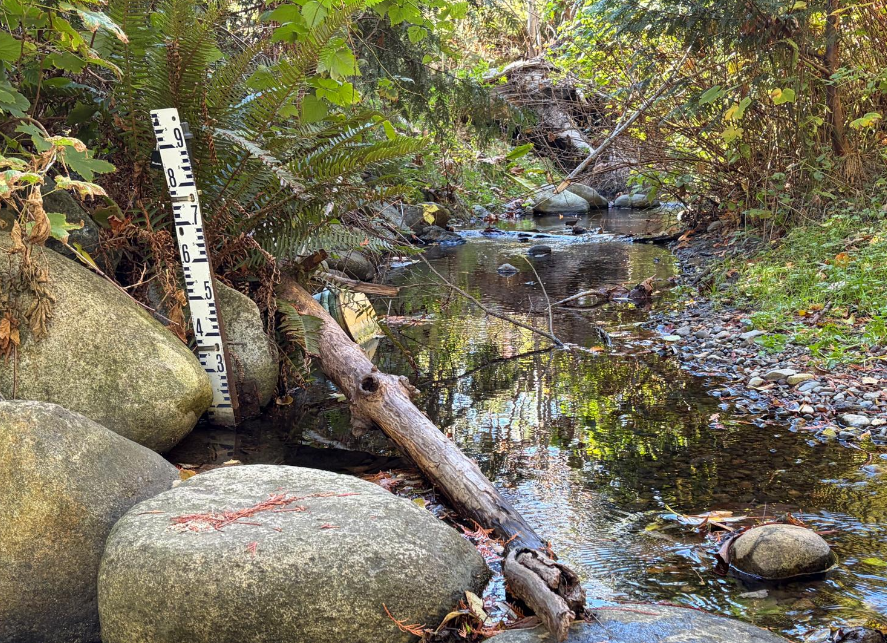
NANAIMO — Increasingly difficult conditions for fish dependent on streams for survival has advocates worried, but their gumboots are at the ready.
Notwithstanding a steady dose of weekend rain, drought is a particular concern during what has been a dry fall to date as various mature salmon stocks make their way up dozens of regional streams to spawn.
Jean-Michel Hanssens of Departure Creek Streamkeepers said the urban stream flowing alongside Bay St. would be decimated without the benefit of a crucial groundwater supply.
He said more consistent rain is a necessity this time of year.
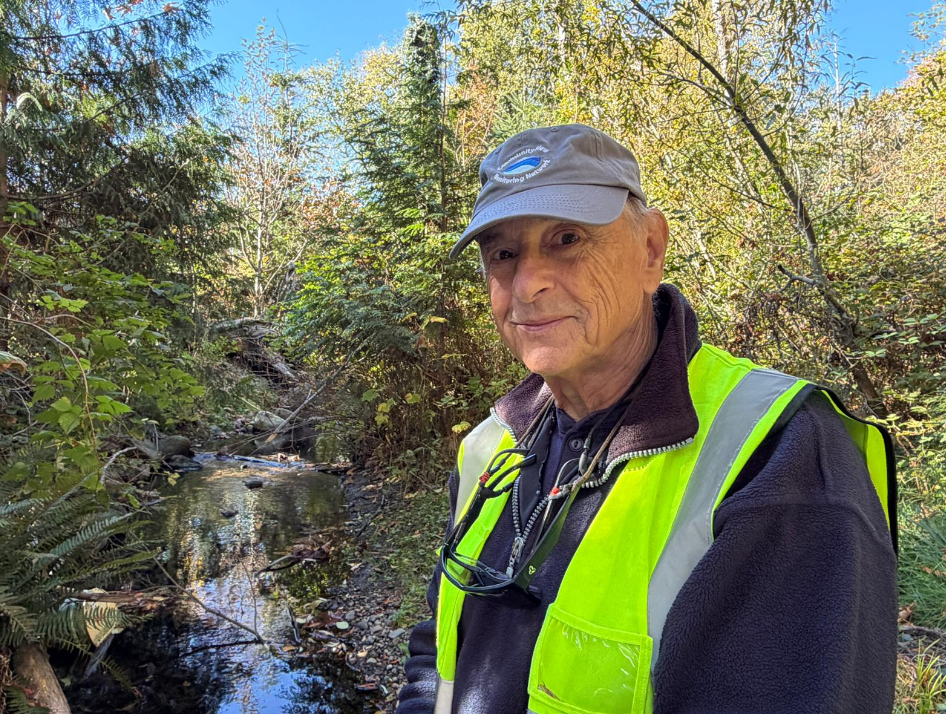
Jean-Michel has been a longtime member of Departure Creek Streamkeepers. (Image Credit: Ian Holmes/NanaimoNewsNOW)
“The water is of course very low, it’s very concerning, everyone that’s involved in this is concerned about the levels of the water, this is very unusual to see an October with so very little water,” Hanssens said.
Extensive in-stream and surrounding work over the last several years has made for a more fish-friendly Departure Creek, home to Pink and Coho salmon, as well as resident and sea-run Cutthroat.
Last year supplied a modern-era record 680 Pink salmon return to spawn at Departure Creek, Hanssens said.
He was pleased to see over 100 mature pinks struggled to splash their way upstream recently, despite low flows and numerous opportunistic otters waiting near the creek’s mouth.
Hanssens is hoping for consistent rain over the next several weeks as Coho wait in Departure Bay to return.
Fed by storm drains with toxic substances an ever-present concern, Hanssens said constant care is required to give Departure Creek its best chance to meaningfully support fish.
More consistent precipitation would make a significant difference, he emphasized.
“Without the water, good quality water and water of a proper temperature and flowing and lots of oxygen in it, we won’t get fish, it’s as simple as that. Without lots of flowing water, we have a problem,” Hanssens told NanaimoNewsNOW during a recent site visit.
A pending restoration project at involves planting native plants near the creek where invasive blackberry bushes once stood, which Hanssens said will provide numerous environmental benefits, including cool the stream’s temperature during the summer.
“There’s a lot of goodwill and people really want to see it done, so we get it done,” he said.
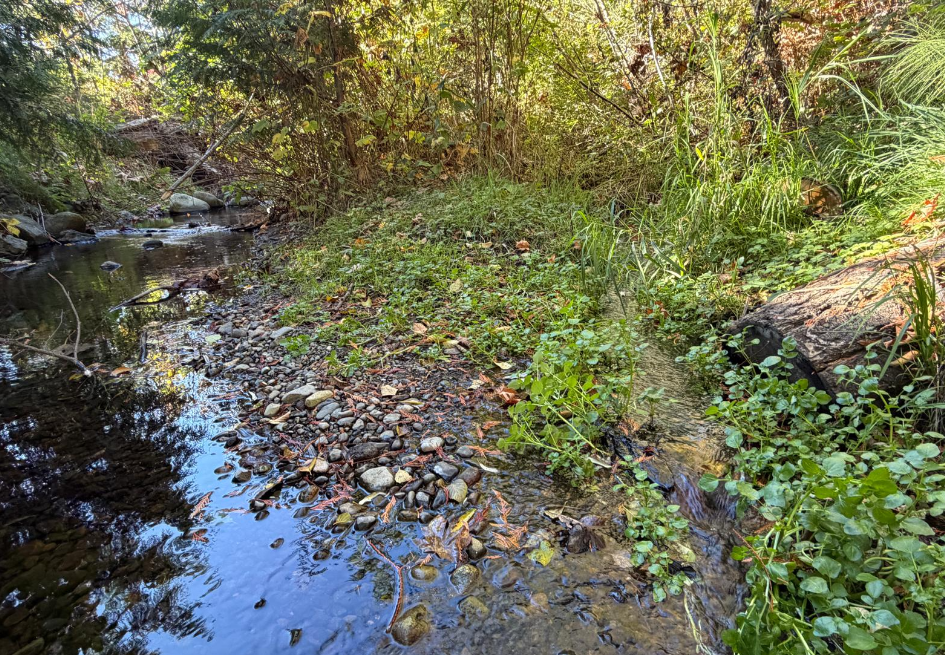
a side-channel seen to the right provides added capacity during storms, and connects to a pond used by developing fry and smolt Coho. (Image Credit: Ian Holmes/NanaimoNewsNOW)
Backed by some 80 volunteers, Parksville-based Mid Vancouver Island Habitat Enhancement Society (MVIHES) predominately tends to Englishman River and Shelly Creek fish-rearing streams.
President Barb Riordan said smaller urban streams like Shelly Creek suffer the most during prolonged droughts.
“Normally we have a drought in summer, but this drought has been going on long enough that I think the fish are probably getting very stressed and that really impacts their survival,” Riordan said.
Home to Coho salmon and resident Cutthroat trout, Riordan said the short urban stream has reduced pools of water, meaning less available oxygen and habitat for fish to hide from predators like otters and herons.
Riordan said no mature Coho returned to Shelly Creek last year.
She fears what the rest of this year holds.
“I’m really concerned that we’ll have a second year without any spawning in the creek.”
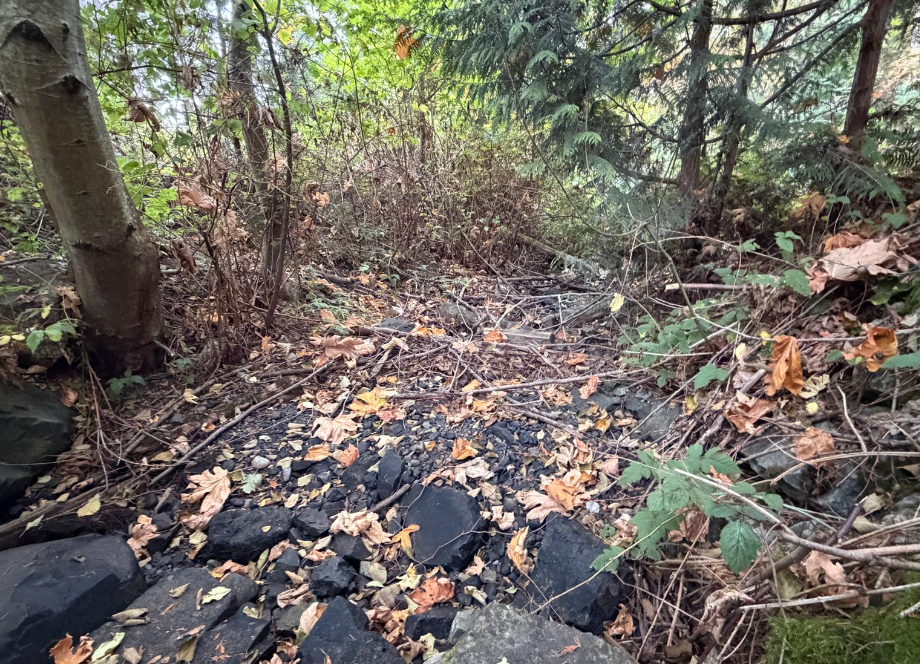
Several regional salmon-bearing creeks are extremely dry, including north Nanaimo’s Walley Creek. (Image Credit: Ian Holmes/NanaimoNewsNOW)
Like Departure Creek Streamkeepers, extensive restoration projects by MVIHES over the last several years has included removing sediment by the dump truck load in exchange for rocks and gravel in Shelly Creek.
Help from Mother Nature with adequate rain and snow would go a long way, Riordan emphasized.
“Salmon eggs need a water temperature of five to eight degrees to survive, anything higher and they’ll die and salmon become pretty stressed at 18 degrees water temperature; snowmelt is really important.”
A Fisheries and Oceans Canada (DFO) Pacific Region statement acknowledged negative impacts prolonged drought conditions in streams have on salmon, including blocked passages to spawning grounds, increased water temperatures, and added exposure to predators.
“DFO also provides advice to Indigenous, community stewardship, and other groups on how to help salmon during times of drought,” the DFO statement read.
Subscribe to our daily news wrap. Local news delivered to your email inbox every evening. Stay up-to-date on everything Nanaimo and Oceanside.
Follow us on: Twitter (X) | Bluesky | Facebook